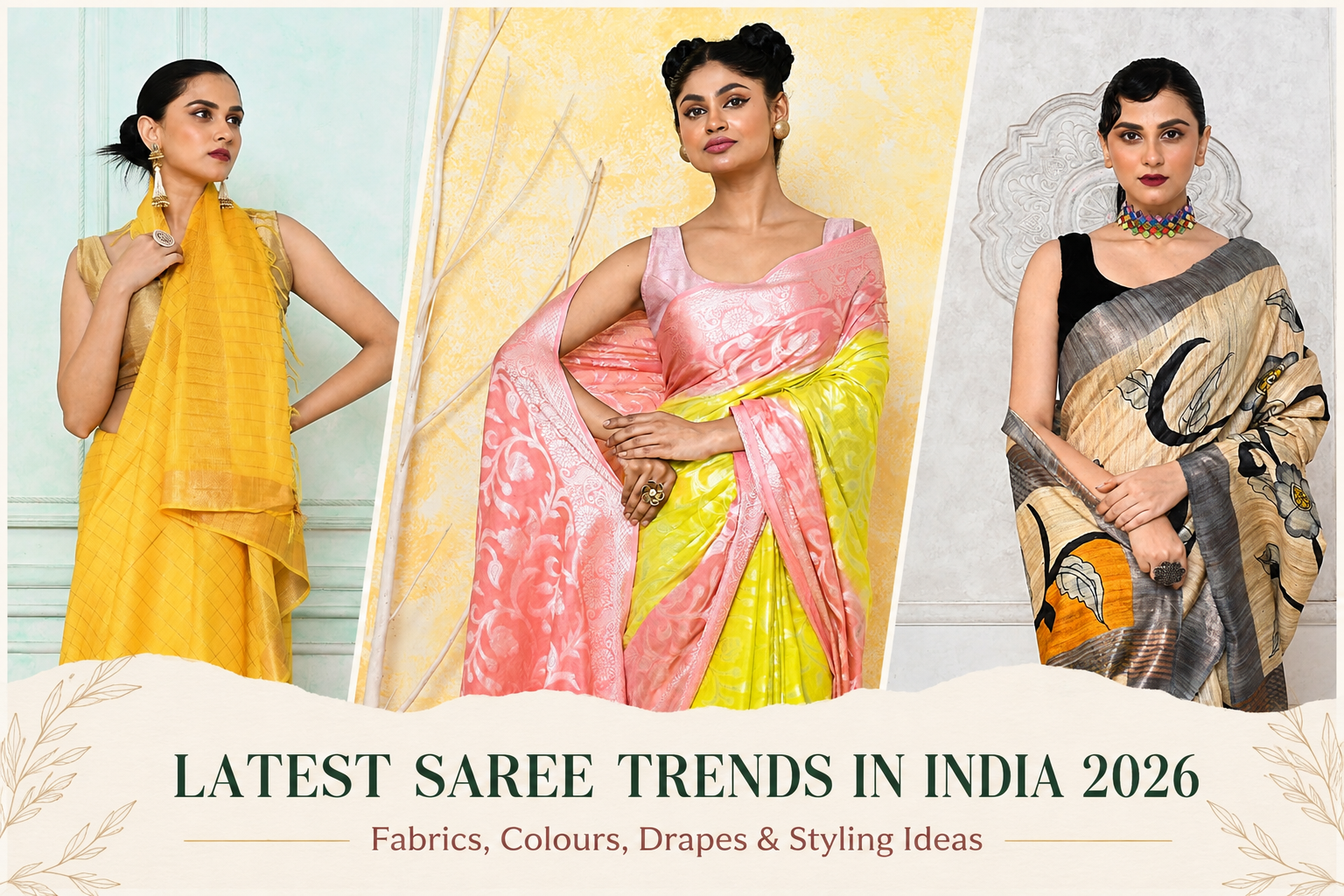
The saree is changing with the way women live, work and celebrate. In 2026, the latest saree trends in India are not about replacing tradition. They are about making the six-yard silhouette easier to wear, more versatile and more personal.
From pre-draped sarees and lightweight fabrics to jewel tones, softer festive colours, handcrafted prints and contemporary drapes, saree fashion is moving towards pieces that can be worn more than once and styled in more than one way.
Here are the latest saree trends in India for 2026 worth knowing before you add your next saree to your wardrobe.
1. Pre-Draped and Ready-to-Wear Sarees
One of the strongest modern saree trends in 2026 is the move towards pre-draped and ready-to-wear sarees. These styles keep the visual elegance of a traditional saree while reducing the time and effort needed to create pleats and arrange the pallu.
They work particularly well for first-time saree wearers, working women, destination events and occasions where comfort matters as much as appearance. The trend also reflects a wider change in ethnic fashion: women want traditional silhouettes that fit naturally into busy modern lives.
2. Lightweight Sarees Are Winning Everyday Wardrobes
Heavy sarees will always have their place in weddings and major celebrations, but lightweight sarees are becoming increasingly useful for everyday dressing, office events, lunches and smaller festivities.
Organza, georgette, chiffon, linen, lightweight silk and soft cotton blends offer movement without making the outfit feel overwhelming. The appeal is simple: a lighter saree can be dressed up with jewellery and a statement blouse or kept understated with a simple blouse and minimal accessories.
If you enjoy fabric-led dressing, you may also like our guide to linen and its journey from fabric to fashion.
3. Handloom, Craft and Handmade-Looking Textures
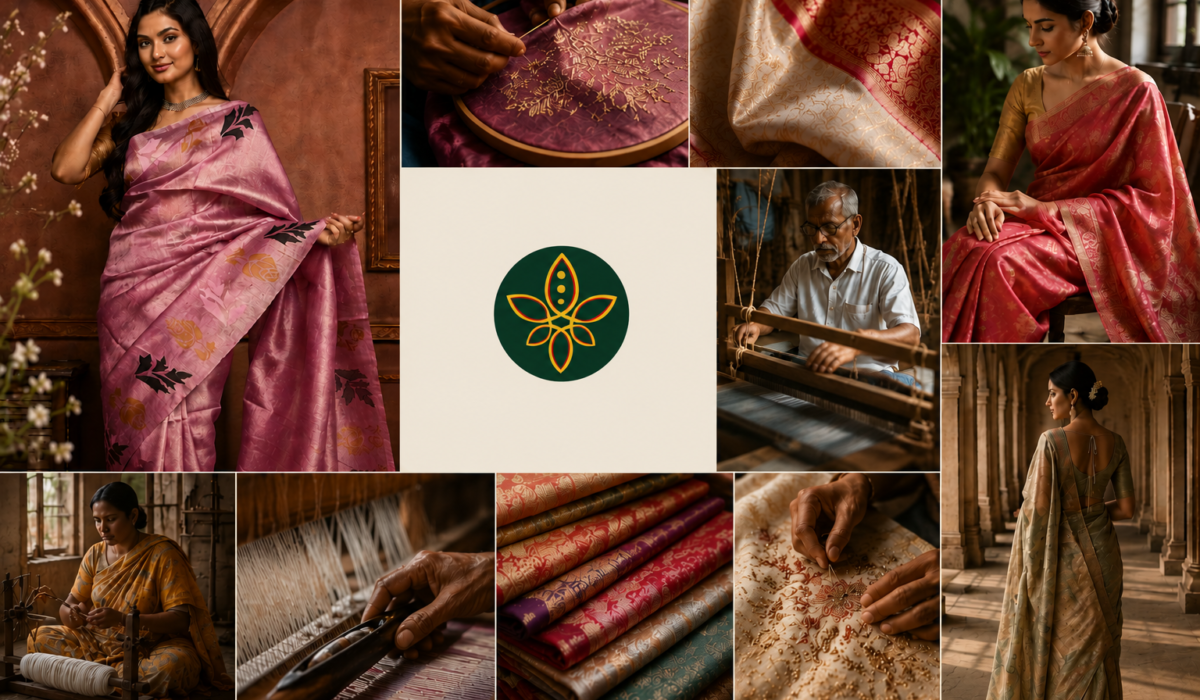
Another important direction in saree fashion is the renewed interest in craftsmanship. Handloom textures, block prints, kantha-inspired embroidery, woven motifs and regional craft details give a saree a sense of individuality.
Recent fashion coverage continues to highlight Indian crafts such as Jamdani, Chikankari, Paithani and Banarasi, showing how heritage techniques continue to influence contemporary dressing. For shoppers, this means the appeal of a saree is increasingly connected not just to its colour or silhouette, but also to the story behind its making.
For a deeper look at how these traditions developed, read our history of Indian ethnic wear.
4. Floral and Nature-Inspired Prints
Floral sarees continue to have strong appeal, but the look is becoming more expressive. Instead of only delicate repetitive florals, contemporary sarees are using larger botanical motifs, hand-painted effects, leaves, abstract flowers and nature-inspired compositions.
These prints are especially versatile because the same saree can move from daytime occasions to festive dressing depending on the blouse, jewellery and drape. A floral saree with a simple blouse can look effortlessly elegant, while a contrasting blouse can turn it into a statement outfit.
5. The 2026 Saree Colour Palette Is More Personal
Colour is becoming one of the easiest ways to modernise a saree. Current 2026 fashion coverage points towards a broader palette that includes emerald and other jewel tones, wine and rust reds, sage and mint greens, lavender, champagne, ivory and warm neutrals.
Traditional red and maroon are still important, particularly for weddings and festive dressing, but they are being joined by colours that feel more individual and easier to re-wear. Pastels are no longer restricted to summer, while jewel tones can create a rich festive look without relying entirely on heavy embellishment.
6. Modern Drapes Are Giving the Saree a New Personality
The classic Nivi drape remains a favourite, but modern styling is making the saree more experimental. Belted sarees, slimmer pleats, open pallus, contemporary seedha-pallu variations, pant-style combinations and other fusion drapes are being used to create different silhouettes.
The important change is not that traditional draping is disappearing. Instead, women are choosing the drape according to the occasion, comfort and personality. A saree can therefore look completely different without changing the fabric.
7. Blouses Are Becoming the Statement Piece
A saree may remain traditional, but the blouse is increasingly where personal style comes through. Structured blouses, contemporary necklines, statement sleeves, minimal corset-inspired shapes, high necks and contrasting fabrics are being paired with classic sarees.
One useful styling rule is to decide what you want people to notice first. If the saree has a strong print or woven border, keep the blouse relatively clean. If the saree is simple, a distinctive blouse can become the focal point.
8. Sarees That Can Be Worn Beyond One Occasion
A major shift in saree buying is the desire for versatility. Instead of purchasing a saree only for one wedding or festival, many women are looking for pieces that can be styled differently for several occasions.
A lightweight silk saree, for example, can work with traditional jewellery for a festival, a minimal blouse for a daytime gathering or a contemporary blouse for an evening event. A printed saree can move from casual dressing to a more polished occasion look with the right accessories.
This is perhaps the most practical saree trend of 2026: buying for the wardrobe rather than buying only for the occasion.
9. Traditional Sarees Are Being Styled in Modern Ways
Traditional silk and handloom sarees are not losing relevance. Instead, they are being styled with cleaner blouses, contemporary jewellery, simpler hair, modern footwear and more relaxed drapes.
This balance between heritage and modernity is what makes Indian sarees so adaptable. The fabric, weave or motif can carry generations of history while the styling can feel completely current.
If you love silk, explore our guide to 18 types of famous Indian silk sarees.
10. The Real Trend: Sarees That Feel Like You
Perhaps the biggest change in saree fashion is that there is no single definition of what is fashionable anymore. One woman may choose a traditional Kanjeevaram, another a hand-printed cotton saree, another a pre-draped contemporary style and another a richly woven Banarasi.
The latest saree trends are therefore less about following a fixed checklist and more about choosing a saree that matches your lifestyle, comfort, personality and occasion.
How to Choose a Trending Saree Without Chasing Every Trend
- Choose the fabric first: think about the climate, occasion and how comfortable you want the drape to feel.
- Choose colour for repeat wear: a shade that works with more than one blouse and occasion will stay useful longer.
- Look at the drape: decide whether you prefer a classic, relaxed or ready-to-wear style.
- Consider craftsmanship: woven, printed and embroidered details can give a saree character beyond surface trends.
- Think about styling: the right blouse and accessories can make one saree look completely different.
Frequently Asked Questions About Saree Trends 2026
What are the latest saree trends in India in 2026?
Some of the key saree trends in 2026 include pre-draped sarees, lightweight fabrics, handcrafted textures, floral prints, broader colour palettes, modern draping styles and contemporary blouse designs.
Which saree colours are trending in 2026?
Emerald and other jewel tones, wine and rust shades, sage and mint, lavender, champagne, ivory and warm neutrals are among the colours gaining attention, while classic red and maroon remain important for festive and bridal dressing.
Are pre-draped sarees still in fashion in 2026?
Yes. Pre-draped and ready-to-wear sarees are one of the most visible contemporary saree trends because they combine the traditional look of a saree with easier dressing.
Which saree is best for everyday wear?
Lightweight cotton, linen, soft silk and easy-to-drape fabrics are practical choices for everyday wear. The best option depends on the climate, occasion and personal comfort.
The Saree Is Evolving, Not Disappearing
The latest saree trends in India show that the saree remains remarkably adaptable. It can be traditional or contemporary, minimal or festive, handwoven or ready-to-wear. What matters is how naturally it fits into the life of the woman wearing it.
And perhaps that is why the saree continues to stay relevant: it does not need to choose between heritage and modernity. It can carry both.