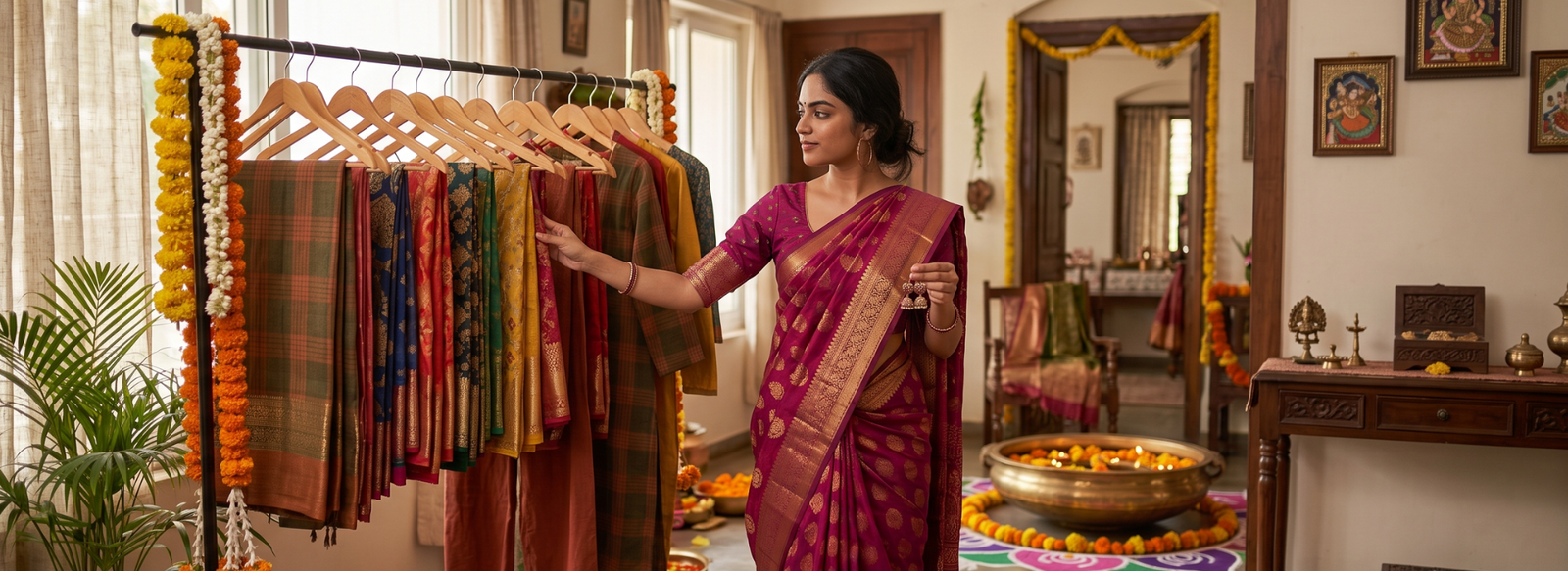
Festive season is when a saree feels most at home. But choosing the right one is not always about picking the brightest colour or the heaviest weave. The best festive saree is one that suits the occasion, feels comfortable for hours and still feels like you.
With Onam, Ganesh Chaturthi, Navratri, Dussehra and Diwali coming up, this is a good time to build a festive saree wardrobe that gives you more than one beautiful look. In this guide, we look at what to wear, how to choose fabrics and colours, and how to make one saree work across different celebrations.
1. Start With the Occasion, Not the Trend
Every celebration has its own mood. A daytime family gathering calls for something very different from an evening Diwali celebration. Before choosing a saree, ask three simple questions: Where am I going? How long will I be wearing it? And how traditional or contemporary do I want the look to feel?
- Daytime celebrations: cotton, linen, Jamdani and lighter silk blends are easy, elegant choices.
- Family pujas: woven details, traditional borders and graceful colours create a festive look without feeling overdone.
- Evening celebrations: silk, tissue, zari and subtle embroidery can add richness.
- Large festive gatherings: choose a saree with enough visual interest to stand on its own, then keep the accessories intentional.
If you want to browse specifically for celebrations, explore Dhunki’s Festival Sarees.
2. Onam: Keep It Elegant, Light and Rooted in Craft
Onam dressing naturally lends itself to graceful, understated sarees. White, ivory, cream and soft gold are classic choices, but you can also bring in colour through a contemporary blouse, jewellery or a subtle woven detail.
For a modern take on this mood, a lightweight linen or Jamdani saree can work beautifully. Dhunki’s Green Pure Linen Saree combines an easy fabric with handcrafted-inspired texture and can be styled simply for daytime celebrations.
3. Ganesh Chaturthi: Add Colour Without Losing Ease
Ganesh Chaturthi is a wonderful occasion for colour. Greens, yellows, pinks, reds and jewel tones can all create a festive mood. If you expect to move between home, puja and social gatherings, choose a saree that looks celebratory without becoming difficult to wear.
A Yellow Jamdani Cotton Saree is a good example of how colour and craft can create a festive look while keeping the fabric relatively easy to wear.
4. Navratri & Dussehra: Let Colour and Silhouette Do the Work
Navratri is the time to be more expressive. Jewel tones, festive yellows, greens, reds and rich pinks can instantly lift the look. You do not necessarily need heavy embellishment—sometimes a strong colour, beautiful border and confident drape are enough.
For an evening or more formal celebration, consider a silk saree with embroidery. Dhunki’s Green Embroidered Silk Saree offers the richness of silk with detail that can be paired with traditional jewellery or styled more minimally.
For more ideas on what is changing in saree fashion this year, read the latest saree trends in India for 2026. If you want to understand the heritage behind different silk traditions, explore our guide to 18 famous Indian silk sarees.
5. Diwali: Choose a Saree That Catches the Light
Diwali is the perfect occasion for fabrics and details that respond beautifully to light. Tissue, silk, zari, subtle embroidery and rich colours can create an elevated festive look without requiring a heavily embellished outfit.
If you prefer a lighter silhouette, an orange or jewel-toned saree with a delicate zari detail can be especially versatile. Take a look at Dhunki’s Orange Zari Linen Saree for a festive look that balances colour, texture and wearability.
6. Which Fabric Should You Choose for the Festive Season?
The fabric can change the entire personality of a saree. It also determines how comfortable you will feel after several hours of wearing it.
| Fabric | Best for | Why choose it |
|---|---|---|
| Cotton | Daytime festivals, puja, family gatherings | Breathable and easy to wear |
| Linen | Contemporary festive looks | Light, textured and versatile |
| Jamdani | Day-to-evening celebrations | Craft-led and elegant |
| Silk | Weddings, Navratri, Diwali evenings | Rich drape and festive presence |
| Tissue & zari | Evening celebrations | Catches light beautifully |
Not sure which natural fabric suits your wardrobe? You can also explore our guide to linen and its journey from fabric to fashion.
7. Choose Colours You Will Wear Again
A festive saree does not have to be a one-occasion purchase. Think about whether you can style the same saree with a different blouse, jewellery and drape.
For example, green can move from traditional festive dressing to a more contemporary evening look. Yellow works beautifully for daytime celebrations. Orange, red and jewel tones can create stronger evening looks. And softer neutrals can become surprisingly versatile when paired with statement jewellery.
This approach is especially useful if you want to build a wardrobe rather than collect sarees that sit unused after one festival.
8. The Blouse Can Change the Saree Completely
You do not always need a new saree to create a new festive look. A blouse can change the personality of the same six yards.
- Pair a traditional saree with a clean, contemporary blouse.
- Use a contrasting blouse when the saree is simple.
- Choose a quieter blouse when the saree has embroidery, zari or a strong print.
- For a modern look, experiment with sleeve length, neckline and blouse colour rather than adding more embellishment.
9. How to Accessorise Without Overdoing It
Festive dressing often becomes more elegant when you choose one focal point. If the saree has a strong border or detailed embroidery, let it lead. If the saree is understated, jewellery can become the statement.
Gold jewellery works naturally with many festive sarees, while silver, pearls and contemporary pieces can create a lighter modern mood. The goal is not to match everything—it is to create balance.
10. A Simple Festive Saree Checklist
Before you buy your festive saree, check:
- Does the fabric suit the weather and the length of the event?
- Can you sit, walk and move comfortably in it?
- Does the colour work with at least one blouse you already own?
- Can the saree be styled differently after the festival?
- Does the craftsmanship or detail make the saree feel special to you?
Frequently Asked Questions About Festive Sarees
Which saree is best for festive occasions?
The best festive saree depends on the occasion. Cotton and linen work well for daytime celebrations, while silk, tissue, zari and embroidered sarees are suitable for more formal or evening occasions.
What colour saree should I wear for Diwali?
There is no single right colour. Jewel tones, red, orange, green, pink, gold and warm neutrals can all work beautifully. Choose a colour that complements your skin tone and that you will enjoy wearing again.
Are linen sarees suitable for festivals?
Yes. Linen sarees can be an excellent choice for daytime festive events because they are lightweight and breathable. Zari, Jamdani or other craft details can give linen a more festive character.
How can I make one saree look different for different festivals?
Change the blouse, jewellery, footwear and drape. A simple saree can look traditional with gold jewellery or more contemporary with a contrasting blouse and minimal accessories.
Find Your Festive Saree at Dhunki
Festive dressing does not have to mean choosing the heaviest saree in your wardrobe. It can be about colour, craft, comfort and the feeling you want to carry into the celebration.
When you are ready to find yours, explore Dhunki’s Festival Sarees, or browse Silk Sarees and Linen Sarees to find a style that feels right for the season.
Celebrate the season in a saree that feels like you.